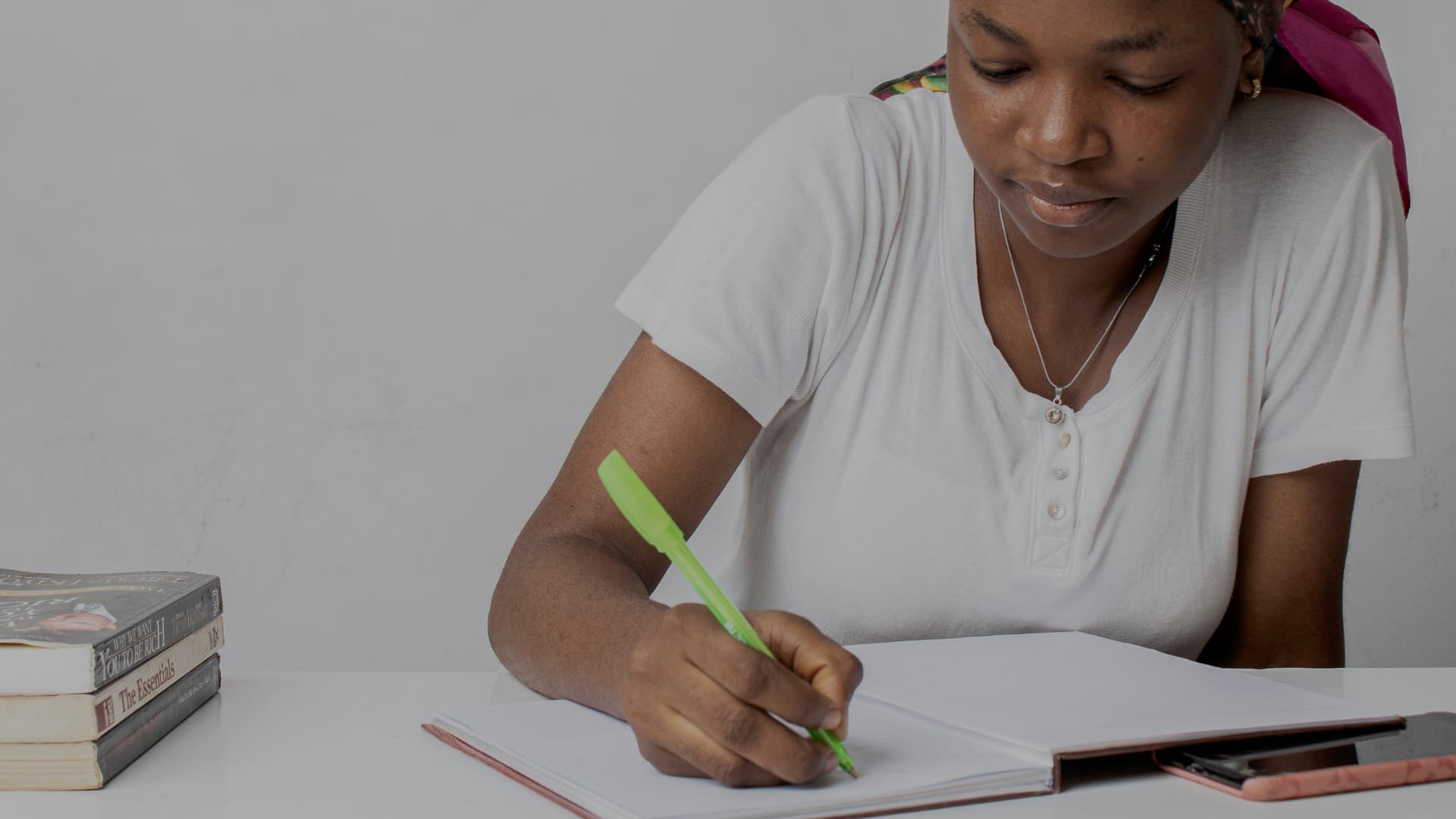
Yes, you can prepare for the DELE B1 in one month, but only if you are already around B1 level: four weeks won't raise your level, but they are enough to learn how each paper works, manage your time and walk into the exam knowing exactly what to do in every task. If you are registered for the session on Saturday 14 November (registration closed on 30 September), here is the plan I suggest, week by week.
What decides whether one month is enough?
Your starting point. If you can already follow conversations and radio programmes on everyday topics, write an email of about 120 words without freezing and talk about your life for two or three minutes, a month is enough to polish your exam strategy.
If you still get lost in long recordings, mix up the indefinido and the imperfecto in almost every sentence or go blank after a minute of speaking, one month won't close those gaps. It will help you get to know the exam, yes, but a later session might be a better idea.
To find out, start with a full practice exam under exam conditions (timed, no help) and mark it honestly. And if you are not sure whether your level is closer to A2 or B1, take the level test first.
What does the DELE B1 look like?
A quick snapshot before the plan:
- Prueba 1, Comprensión de lectura (Reading): 5 tasks, 30 questions, 70 minutes.
- Prueba 2, Comprensión auditiva (Listening): 5 tasks, 30 questions, 40 minutes. You hear every recording twice.
- Prueba 3, Expresión e interacción escritas (Writing): 2 tasks in 60 minutes. Task 1 is a letter or email of 100 to 120 words; Task 2 is a text of 130 to 150 words (you choose one of two options).
- Prueba 4, Expresión e interacción orales (Speaking): 4 tasks in about 15 minutes, plus 15 minutes of preparation.
The papers are grouped in pairs. Group 1: reading and writing. Group 2: listening and speaking. You need at least 30 out of 50 points in each group. Within a group, one paper can make up for the other; between groups, it can't. And there are no partial passes: if you fail one group, you have to retake the whole exam in another session.
A practical detail: reading and listening are taken back to back and come in the same booklet. Then there is a break, followed by the writing paper. The speaking test may be on the same day or a few days before or after; your exam centre emails you the date and time. If you still have no news a week before the exam, contact the centre.
Week 1: how do I train reading and listening?
We start with the two comprehension papers because they improve the most with strategy. You won't raise your level in a week, but you can learn to stop losing easy points.
Monday and Tuesday: reading. Do one or two tasks a day, untimed at first. When you finish, find the exact sentence in the text that justifies each answer and work out why the other two options are wrong. The right answer rarely repeats the words of the text: it says the same thing with synonyms. Options that copy words literally are usually the traps.
Wednesday and Thursday: listening. One or two tasks a day. Read the questions and options before you listen, underline what makes them different, listen twice and answer. Then listen again with the transcript and mark where each answer was.
Friday: reading and listening back to back, timed. This is the most important time strategy: you have 70 minutes for reading, but aim to finish in 60 (about 12 minutes per task). Use the 10 minutes you save to read the listening questions, which are in the same booklet and start straight afterwards. Reading the questions before the audio begins makes a huge difference.
Saturday: review. Write down every mistake and ask yourself why it happened: did you not understand the text, misread the question, or fall for a word you recognised? The cause matters more than the mistake.
Sunday: rest.
Week 2: how do I prepare the writing paper?
Two tasks in 60 minutes, so about 30 minutes per task. For example: 5 minutes to read the prompt and plan, 5 for an outline, 10 to write, 5 to copy it out neatly and 5 to check.
Monday and Tuesday: Task 1 (letter or email). You reply to a short text (an email, a note, a forum post) following a set of guidelines. Cover every point in a balanced way, answer any questions you are asked and always think about who will read your text: you don't write to a friend the way you write to a language school. Have your greetings and sign-offs ready.
Wednesday and Thursday: Task 2. Here you tell an experience, describe something and give your opinion. Practise with several prompts and, above all, always outline before you write: introduction, body and conclusion, with a variety of connectors.
Friday: the full writing paper, timed. Count your words at the end. Aim for 100-120 in Task 1 and 130-150 in Task 2. If you write fewer than 70 (Task 1) or 90 (Task 2), the text falls into the lowest band of the marking scale. Going far over the maximum doesn't help either: more words, more chances to make mistakes. A tip for exam day: work out beforehand how many words you usually fit on a line, so you count lines instead of words.
Saturday: review. Reread your texts the next day as if someone else had written them. Check agreement, past tenses, ser and estar, the subjunctive with wishes and doubts, and whether you keep using the same connectors (“y”, “pero”, “porque”).
Sunday: rest.
Week 3: how do I prepare the speaking test?
The speaking test has four tasks:
- Task 1: a short presentation on a topic you choose from two (2-3 minutes). This is the one you prepare beforehand.
- Task 2: a conversation with the interviewer on the same topic, with questions about your experience and opinion (3-4 minutes).
- Task 3: describing a photo, chosen from two, and answering a few questions about it (2-3 minutes).
- Task 4: a role-play linked to the photo, such as making a complaint or asking for information (2-3 minutes).
Monday and Tuesday: Tasks 1 and 2. The 15 minutes of preparation are for Task 1. Practise with a timer: 15 minutes to prepare an outline (key words and arrows, no long sentences, because in the exam room you can only glance at your notes, not read them out), then speak for two or three minutes while recording yourself. Try common topics: work, studies, travel, health, free time, technology. Then think about what you might be asked in Task 2 on that topic and answer with examples from your own life.
Wednesday and Thursday: Tasks 3 and 4. Describe photos always following the order of the guide questions, which are always the same: the people (where they are, what they're like, what they're doing), the place, the objects, the relationship between them and what you think they're talking about or thinking. For Task 4, rehearse everyday situations (returning something to a shop, changing an appointment, complaining about a service). If you have no one to practise with, record yourself playing both parts.
Have a few phrases ready to buy time or pick up the thread: “Es una buena pregunta, nunca me lo había planteado” (that's a good question, I've never thought about it), “Lo que quería decir es…” (what I meant was…), “Como iba diciendo…” (as I was saying…).
Friday: the full speaking test. 15 minutes of preparation and about 15 minutes of test, recording yourself. Listen back afterwards, even if it's hard.
Saturday: pick three things to improve. Just three.
Sunday: rest.
Week 4: what do I do in the final week?
This week you don't learn anything new: you consolidate.
- Monday: full reading and listening papers, back to back, with the 60 + 10 minute strategy.
- Tuesday: a full writing paper and a full speaking test.
- Wednesday: go through your mistakes notebook and tackle the ones that keep coming back.
- Thursday: an easy day. Read something you enjoy in Spanish, listen to a podcast, chat with someone for a while. No full practice exams.
- Friday: logistics. ID, registration receipt, how to get to the centre and how long it takes.
- Saturday: exam day.
About materials on the day: the answer sheets for reading and listening are filled in with a pencil (a no. 2 pencil) because they're marked by a machine that only detects graphite, not ink, and you can use an eraser. The writing paper is done in blue or black pen, with no correction fluid or erasable pens. Many centres provide the materials, but bring your own just in case.
What materials do I need for these four weeks?
You don't need a pile of books. This is enough:
- The free sample exams on the Instituto Cervantes website.
- A book of up-to-date practice tests that simulate the exam, so you have enough material for four weeks.
- A notebook for your mistakes.
- A timer (your phone's will do).
- Someone to practise speaking with, even by video call. If you have no one, record yourself.
What about nerves?
It's normal for them to rise in the last week. It doesn't mean you aren't ready; it means you care.
- Sleep well in exam week. Revising the subjunctive at 2 a.m. won't help.
- The day before, don't do full practice exams. Go over your notebook and rest.
- On the day, arrive early and don't open your notes at the door.
For more ideas, here are 5 tips for the day before the exam.
Frequently asked questions about preparing for the DELE B1 in a month
Can I pass the DELE B1 in a month starting from scratch?
No. From scratch, no. From a solid A2, it's hard. If you already have a B1 level, a month is enough to work on exam strategy.
How many hours a day should I study?
Two or three hours of active study from Monday to Saturday, with one day off, is a good guide. More hours don't mean more learning if you end up exhausted.
What happens if I fail one of the two groups?
There are no partial passes in the DELE. If you don't reach 30 out of 50 in one of the groups, the result is “no apto” (fail) and, to get the diploma, you have to take all the papers again in another session, including the group you had passed.
Should I leave a question blank if I'm not sure?
No. In reading and listening, wrong answers don't lose points: a blank answer scores 0, just like a wrong one. Always mark an option.
Is it better to do full practice exams or work task by task?
Both: task by task for the first three weeks and full exams in the last one. If you only do full exams, you don't analyse your mistakes; if you only do single tasks, you don't train for the fatigue of exam day.
How much does the DELE B1 cost?
In Spain, €173 (2026 fee). Outside Spain, each exam centre sets its own price, and it varies from country to country: check with your centre or in the Instituto Cervantes online shop.
In short
- One month is enough if you are already around B1; if your A2 is still shaky, consider a later session.
- Four-week plan: comprehension, writing, speaking and, in the last week, full practice exams and review.
- Finish reading in 60 minutes and use the remaining 10 to read the listening questions.
- Writing: 100-120 and 130-150 words; never below 70 and 90.
- Speaking: the 15 minutes of preparation are for Task 1; write an outline, not a script.
- Pencil for the reading and listening answer sheets; pen for writing.
- Answer every question: wrong answers don't count against you.
If you want to prepare with a clear method, my DELE B1 course gives you strategies for each paper, commented examples, a community, a Q&A chat and group calls. If you'd rather practise on paper, there is also my book on Amazon, with 4 up-to-date practice tests that simulate the exam. And if you'd like free resources and reminders before each exam session, sign up for the newsletter.
¡A por el DELE! 🇪🇸