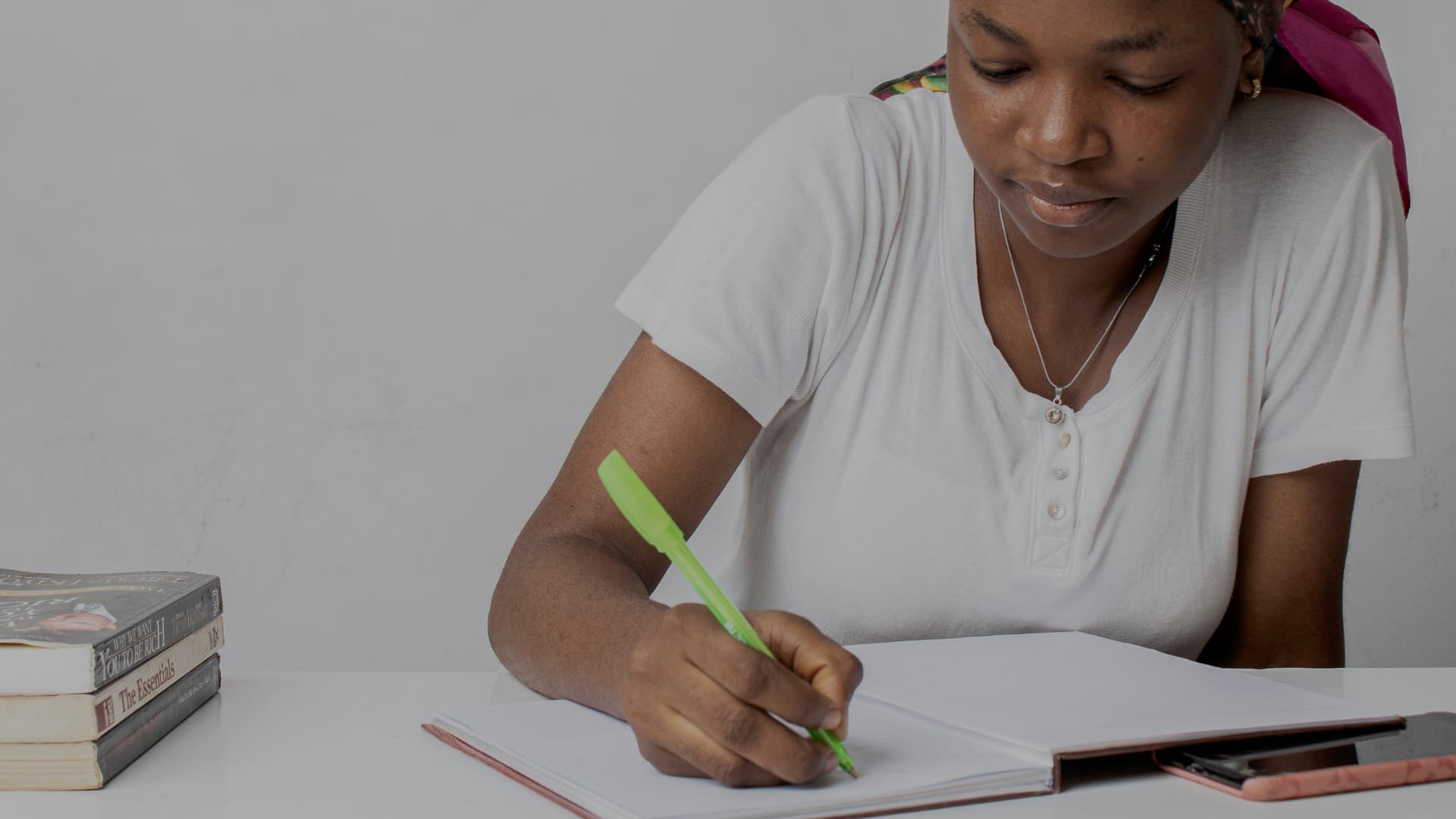
To describe the picture in DELE B1 speaking Task 3, work through the guide questions that always appear under the photo, in order: the people (what they're like and what they're doing), the place, the objects, the relationship between the people and what they're thinking or feeling. That way you'll speak for about two minutes without going blank, with hypotheses and position vocabulary. Afterwards, the interviewer will ask you a few questions about your own experiences and opinions on the topic.
Almost everyone feels a bit daunted at the idea of describing a photo in front of an interviewer: an image you're seeing for the first time and the feeling that nothing is going to come to mind. Don't worry, it's completely normal. Once you have a mental structure and some basic vocabulary for describing pictures, this task stops being scary.
In this post I'll tell you, from an examiner's point of view, what is assessed in Task 3 of Prueba 4 of the DELE B1, what structure you can follow step by step, what vocabulary it's worth having ready and which grammar structures (hay and está, estar + gerund, ways of making hypotheses) are going to save you. And at the end you'll find the most typical mistakes, so you don't make them.
What is Task 3 of the DELE B1 and how long does it last?
Prueba 4 of the DELE B1 is called “Expresión e interacción orales” (speaking and spoken interaction) and has four tasks. Task 3 is the photo one.
It works like this: you're offered two photographs, each on a very different topic, and you choose one. You describe it in a monologue of about two minutes and, when you finish, the interviewer asks you three or four questions on the topic of the picture, but about you: your experiences, your likes, your opinion.
Three important things to know before you go:
- It isn't a free description, it's a guided one. Under the photo there are always the same questions: what the people are like, where they are and what they're doing; what the place is like; what objects there are; what the relationship between the people is; and what they're thinking or how they feel. The interviewer doesn't ask you them: they're there to guide your description. Since they never change, learn them at home.
- The photo you choose decides the topic of Task 4. The Task 4 dialogue is related to the topic of Task 3, so choose your photo thinking about which situation you might get next.
- You don't prepare Task 3 beforehand. The 15 minutes in the preparation room are for Task 1 (and, if you have time, for thinking about the Task 2 questions, which are on the same topic). You see the photo for the first time in the exam room. That's why it pays to have an outline in your head that you can switch on the moment you see it.
Why do descriptions fall short (and why is that a problem)?
One of the most common slip-ups in this task isn't saying things wrong. It's saying too little.
Lots of people describe the photo in 40 seconds: “Hay una mujer con un niño en un parque, están contentos y hace sol”. Full stop. And then they go quiet.
If this happens to you, the interviewer will help you with questions about what you've left out. That's not a disaster, but the task stops being your description and becomes a string of questions and answers, and you don't show that you can speak at length, which is exactly what the B1 asks of you.
The good news is that if you go through the five guide questions, with details and a hypothesis or two, you'll comfortably reach the two minutes without feeling forced.
What is assessed in Task 3?
There are two people in the room. The interviewer, who talks to you, gives you a single overall mark for the whole speaking test, worth 40 %. The assessor, who doesn't take part in the conversation, marks you using scales, and that mark is worth 60 %. Tasks 3 and 4 are marked together, on four aspects:
- Coherence. Do you link your ideas with connectors (primero, además, por otro lado, por eso)? Do you cover what the guide questions ask and answer what the interviewer asks you?
- Fluency. Do you speak at a reasonable pace, or do you stop every three words? Natural pauses, yes. Long silences, no.
- Accuracy. Agreement, verb tenses, prepositions. At B1 you can get some things wrong, but not systematically.
- Range. Varied vocabulary, structures a little more complex than at A2, and attempts at hypotheses.
Careful with this: nobody expects a perfect speech. They expect a B1 speech. That means you can use “parece que”, “creo que”, “no sé si”, “a lo mejor”, and that works in your favour.
How do you describe the picture step by step?
The safest approach is to follow the guide questions in the same order, every time you practise. That way you won't forget any of them. Five steps.
Step 1: the people. How many are there, where are they, what are they like and what are they doing? Approximate age, clothes, expression and action. “En esta foto vemos a dos personas, una mujer de unos treinta años y un niño pequeño, de unos cinco. Llevan ropa cómoda. Están jugando con una pelota”.
Step 2: the place. Where are they and what is it like? “Están en un parque que parece bastante grande, con mucho césped y árboles”.
Step 3: the objects. What objects are there, where are they and what are they like? This is where you use hay and está and position vocabulary. “En primer plano hay una pelota roja. A la izquierda hay un banco vacío y al fondo se ven unos columpios”.
Step 4: the relationship between the people. This is where the hypotheses start, because it's usually not obvious. “Yo diría que es una madre con su hijo, aunque también podría ser su tía”.
Step 5: what they're thinking and how they feel. More hypotheses. “Parece que lo están pasando muy bien. A lo mejor la madre está pensando que es un buen momento para desconectar del trabajo”.
To wrap up, you can say something as simple as “Y esto es todo lo que veo en la foto”. Then the interviewer moves on to their questions.
What vocabulary do you need to describe a picture in the DELE B1?
You're not going to learn a whole dictionary, but it's worth having these pieces in your head.
To place things in space:
Al fondo. En primer plano. En el centro. A la izquierda / a la derecha. Arriba / abajo. Al lado de. Delante de / detrás de. Entre… y…
To describe people:
Una mujer / un hombre / una persona / una chica / un chico de unos… años. Lleva (puesto) + clothes. Tiene el pelo… Parece (cansado/a, contento/a, preocupado/a). Está sonriendo / hablando / mirando.
To make hypotheses:
Parece que… Da la impresión de que… Yo diría que… A lo mejor… Probablemente… Tal vez… Tiene pinta de… Por lo que se ve…
To connect ideas:
Primero, además, también, por un lado, por otro lado, en cuanto a, respecto a, mientras tanto, por último. Try to use at least four different connectors in your description.
With this repertoire, it's much harder to go blank.
Which grammar structures come up most in this task?
There are three blocks of grammar worth having under control.
1. The present and estar + gerund
To describe what's happening in the photo, combine the present (“la mujer lleva una camiseta blanca”, “el niño sonríe”) with estar + gerund for actions happening at that moment (“están jugando”, “un hombre está cruzando la calle”). Both are natural in a description; what makes it rich is switching between them.
Quick trick: when you get to “what they're doing”, use estar + gerund at least once. It forces you to describe the action and not just the people.
2. Hay or está
Still one of the eternal topics. Here it is in a nutshell:
Hay is what you use to introduce something for the first time, something indefinite. “Hay una mujer”, “Hay árboles”, “Hay un banco”.
Está / están is what you use to locate something that has already been mentioned or is definite. “La mujer está en el centro”, “Los árboles están al fondo”, “El banco está a la izquierda”.
“Hay una bici a la izquierda” (you're introducing it) is not the same as “la bici está a la izquierda” (we already knew there was a bike).
Wrong: “Está una mujer con un niño en el parque”.
Right: “Hay una mujer con un niño en el parque. La mujer está sentada en el suelo”.
3. Ways of making hypotheses
The last two guide questions (the relationship between the people and what they're thinking or feeling) require hypotheses, no way around it. This is what separates a B1 from an A2 in this task: don't stick to the obvious, interpret.
- “Parece que están de vacaciones”.
- “Da la impresión de que es por la mañana, por la luz”.
- “Yo diría que se conocen desde hace tiempo”.
- “A lo mejor están celebrando algo”.
- “Tiene pinta de ser un día de fin de semana”.
Notice that some of these structures take the indicative (“a lo mejor están”) and others can take the subjunctive (“puede que estén”, “es posible que se conozcan”). Using both gives you more variety.
What would a complete description sound like?
Imagine a photo: a woman and a boy in a park, playing with a ball, a sunny day, other children in the background. This is how a B1 description following the guide questions could sound:
En esta foto vemos a dos personas: una mujer joven, de unos treinta años, y un niño pequeño, de unos cinco. La mujer lleva una camiseta blanca y unos vaqueros, y el niño lleva una camiseta azul. Están jugando con una pelota: la mujer está sonriendo y el niño está corriendo hacia ella.
Están en un parque que parece bastante grande, con mucho césped y árboles que dan sombra. Por la luz, da la impresión de que es un día soleado, quizás por la tarde.
En cuanto a los objetos, en primer plano hay una pelota roja. A la izquierda hay un banco de madera y al fondo se ven unos columpios, donde están jugando otros niños.
Respecto a la relación entre ellos, yo diría que es una madre con su hijo, aunque también podría ser su tía o una amiga de la familia.
Por último, creo que están muy contentos y relajados. A lo mejor la madre está pensando que es un buen momento para desconectar del trabajo, y el niño, que no quiere irse a casa todavía.
That's about two minutes spoken at a normal pace. It follows the five guide questions, switches between the present and estar + gerund, uses hay and está correctly, and has hypotheses and several connectors. Then come the interviewer's questions: “¿Y tú vas a menudo al parque?”, “¿Qué hacías los fines de semana cuando eras pequeño?”. That's where your personal experience comes in.
Which typical mistakes should you avoid?
Here are the most common ones. Small, but recurrent.
Starting with “la foto es”. Better “en la foto vemos” or “en esta imagen aparece”. It's more natural.
Skipping guide questions. If you forget the objects or how the people feel, the interviewer will ask you, but it's better if it comes from you. Always practise in the same order.
Describing only the obvious and going quiet. “Hay una mujer y un niño”. Full stop. That's five seconds. Always keep going: age, clothes, expression, action, place, objects, hypotheses.
Mixing up ser and estar with people. “Es contento” isn't correct: it's “está contento”. Adjectives describing moods go with “estar”.
Getting the gerund wrong. “Está jugar” (no), “está jugando” (yes). Gerunds end in -ando / -iendo.
Not making a single hypothesis. If your whole description is “hay esto, hay aquello”, you stay at A2. Use “parece que”, “yo diría”, “a lo mejor”.
Giving one-word answers to the final questions. When the interviewer asks “¿y a ti te gusta ir al parque?”, don't just say “sí” and leave it there. Develop it: “Sí, me encanta. Cuando puedo, voy los domingos por la mañana porque…”.
Never looking up from the photo. You can look at it and point at what you're describing, but the interaction is with the interviewer. Look up from time to time.
What do I do if my mind goes blank?
If you see the photo and suddenly nothing comes to mind, do this.
Breathe. Count to three in your head. And start with the first guide question: “En esta foto vemos a…”. That first “vemos” sets off the rest.
If you get stuck halfway, don't go quiet. Use bridge phrases: “También me llama la atención…”, “Otra cosa que se ve es…”, “Y respecto a…”. They give you two or three seconds to think while you keep talking.
And above all, don't beat yourself up over a word you can't remember. If you don't know how to say “columpio” (swing), say “una cosa donde se sientan los niños para balancearse”. That's what B1 is about: being able to get by, not having a perfect dictionary in your head.
Frequently asked questions about DELE B1 speaking Task 3
How long do I have to speak?
The description lasts about two minutes. If it's much shorter or you leave out a guide question, the interviewer will help you with questions. After that come three or four questions about your experiences and opinions related to the topic of the photo.
Can I choose between several photos?
Yes. You're offered two photos on different topics and you choose one. Pick the one that gives you more to talk about (more people, more actions, more context) and think about Task 4 too, because the dialogue will be related to the topic of the photo.
Do I have to answer the questions printed under the photo?
Yes, but not like an interrogation: they're a guide for your monologue. The interviewer doesn't ask them; you work through them as you describe. Since they're always the same, learn them before the exam.
What if I don't really understand what's happening in the photo?
You don't have to understand everything. In fact, not being sure is perfect for making hypotheses: “No estoy segura, pero parece que…”, “Podría ser que…”, “Da la impresión de que…”.
What do I do if the interviewer asks me something I don't understand?
Ask for clarification naturally: “¿Me lo puedes repetir, por favor?”, “Perdona, no he entendido bien la pregunta” (or with usted, if that's what you're using: here I explain whether to use tú or usted in the speaking test). Asking for the odd repetition is normal. What doesn't help you is answering something you weren't asked.
Is it worth practising with photos at home?
Yes, very much so. Pick a random image every day and describe it out loud following the five guide questions, with a stopwatch running. In two weeks you'll notice the difference. If you want to see a picture sheet like the ones in the exam, here's a DELE B1 speaking test sample in PDF.
In short
- Follow the guide questions in order: people, place, objects, the relationship between them and what they're thinking or feeling.
- Choose your photo with Task 4 in mind too, because the dialogue will be on that topic.
- Combine the present with estar + gerund for actions.
- Hay to introduce, está/están to locate.
- Always make hypotheses: parece que, da la impresión de que, yo diría que, a lo mejor.
- Use connectors and position vocabulary: al fondo, en primer plano, a la izquierda, al lado de.
- After the description, develop your answers to the interviewer's questions.
If you want to prepare task by task, my DELE B1 course gives you strategies for each paper, annotated examples, a community, a Q&A chat and group calls.
If you prefer practising on paper, I also have the book on Amazon: https://amzn.to/4e66lV6
If you're still not sure whether your level is B1 or it's already time for the B2, take the level test first to get your bearings.
And if you'd like reminders before each exam session and free resources, sign up for the newsletter.
¡A por el DELE! 🇪🇸