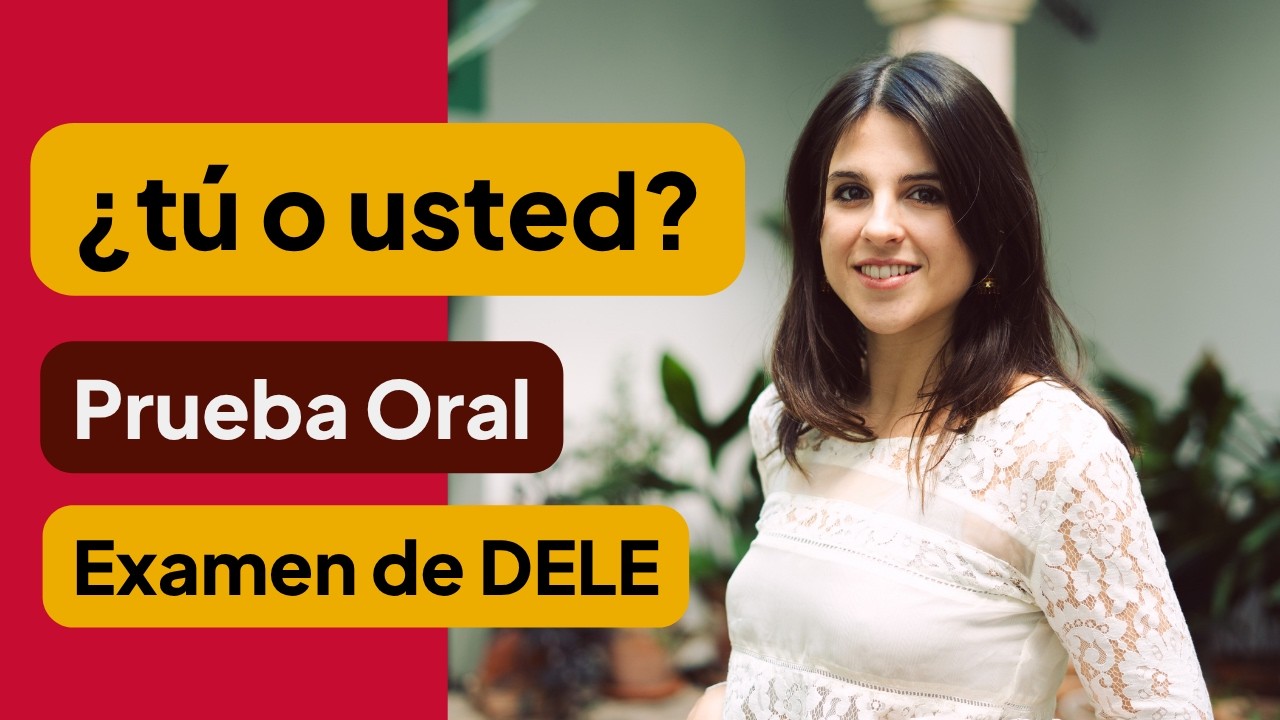
If you make a mistake in the DELE speaking test, don't freeze: apologise with a short phrase (perdone, lo siento) and correct yourself (quería decir que…, me refería a…). Self-correction is viewed positively, because it shows you know the right form. And if you don't understand the question, don't just say anything: apologise, explain whether you didn't hear it or didn't fully understand it, and ask for it to be repeated or rephrased. Here are the exact phrases, from an examiner.
If you prefer to watch it, here's the video (in Spanish):
Making mistakes is normal (even for native speakers)
First of all: making mistakes is normal. Native speakers make them too, especially when speaking fast or using less common vocabulary. What matters is that a mistake doesn't block you or stop you communicating.
Does a mistake cost me marks in the speaking test?
Any mistake can lower your score slightly, especially for accuracy. But if you're able to spot it and correct it, that's viewed very positively: it shows the examiner it was a one-off slip and that you know the correct form.
How to correct a mistake: apologise and rephrase
1. Apologise
Choose the phrase according to register:
- Formal (using usted, with someone you don't know or with more authority): perdone, perdóneme, disculpe, discúlpeme.
- Informal (using tú): perdona, perdóname, disculpa, discúlpame.
- Both registers: lo siento.
2. Correct yourself
- “Quería decir que…” (I meant that…): “Lo siento, quería decir que me gusta bastante”.
- “Me refería a…” + noun, or “me refería a que…” + verb (I was referring to…).
- “O sea…” (I mean…): if what you said didn't make much sense, use it to explain better.
If the mistake is about meaning, use these phrases to rephrase. If it's a grammar mistake, just say lo siento and give the correct form.
What to do if you don't understand the question
It's not a good idea to answer anything if you're not sure what you've been asked. If your answer has nothing to do with the question, you lose quite a few marks because it isn't coherent. It's much better to politely ask for the question to be repeated or rephrased. Do it in three steps:
Step 1: apologise
“Lo siento” works in any register.
Step 2: explain what happened
- If you didn't hear it: “No he podido escuchar bien la pregunta”, “No he podido oír del todo la pregunta”.
- If you didn't understand it: “No he entendido la pregunta”, “No estoy segura de haber entendido la pregunta”.
- If you understood part of it, be more subtle: “No he entendido del todo la pregunta” (I didn't fully understand the question). That shows you did understand some of it.
Step 3: ask for it to be repeated or rephrased
- If you didn't hear it: “¿Podría repetirla?” (formal) or “¿Podrías repetirla?” (informal).
- If you didn't understand it: “¿Podría decirlo de otra forma?”, “¿Podría decirlo de otra manera?” or, more formally, “¿Podría reformular la pregunta?”.
If your problem is freezing and not being able to say anything, read this: what to do if you go blank in the speaking test.
FAQ
Can I ask for the question to be repeated in the DELE?
Yes. It's much better to ask politely than to answer something unrelated to the question.
Does correcting myself cost me marks?
No. Spotting and correcting your own mistake is viewed positively, because it shows you know the correct form.
Should I use usted or tú with the examiner?
It depends on the task and the tone that's set; follow the examiner's lead. Lo siento works either way.
What's the difference between “I didn't hear” and “I didn't understand”?
If you didn't hear it, ask for it to be repeated. If you heard it but didn't understand, ask for it to be said differently or rephrased.
Summary
- If you make a mistake: apologise (perdone, lo siento) and correct yourself (quería decir que, me refería a, o sea).
- Self-correction is viewed positively.
- If you don't understand the question: apologise, explain and ask for repetition or rephrasing.
- Never answer blindly.
Resources to prepare the DELE speaking test
In my courses we prepare the speaking test task by task, with strategies, commented examples and access to me for your questions: DELE preparation courses. If you're taking the A2, there's also a platform with 8 speaking test models.
For free resources and reminders before each exam session, join the newsletter: recursos.aporeldele.com/boletin.
¡A por el DELE! 🇪🇸